On finding urban silence, aka., "may all those who honk have a safe ride home..."

Can you meditate with noise?
Take a few deep breaths, and join me for an avant-garde morning at 4am, listening to the soundscape and circling the Buddha Stupa in Kathmandu, Nepal. I'll tell you why later...
What does your morning ritual sound like? The cell phone alarm, the water faucet, the kettle, some music or morning news?... Try this: Record your morning one day. Listen back later. Is it something that you'd like to listen to on a loop? If so, hold on to it, because you might have a very valuable asset in your hands:
There is a corner of the wellness retreat industry, pegged at billions annually and growing fast. Think guided meditations with nature sounds in the background, sound baths at yoga studios, silent weekend retreats, or even forest bathing in Japan. From tech-delivered micro-retreats to longer travel-based ones, these curated experiences combine spiritual traditions with consumer lifestyle products to provide stillness, peace of mind, and even opportunities for "self-transformations."
I’ve consumed some of these myself. Generally good investments for your health with proven benefits. Yet, is the promised transformations temporary or sustainable? And is meditation about relaxing in silence or curated sensual sound experiences?..
It is definitely not. Sometimes, it is about sitting with discomfort and everything that we try to block out, including noise pollution. Discomfort is the zone where the deeper work begins: in learning how to listen--to silence, signal, or noise.
sound, signal, and noise in India and Nepal
One never learns much in their comfort zone. So, I wondered, what would be a jarring, soul-stirring experience, something very different from my daily in terms of silence, sound, signal, and noise?.. Result: I decided to join a crew on a journey by sound in North India and Kathmandu in April, 2025, traveling to sites where sound is a major part of all rituals throughout the day. Just curious and witnessing, not a subscriber to any of these religious practices...

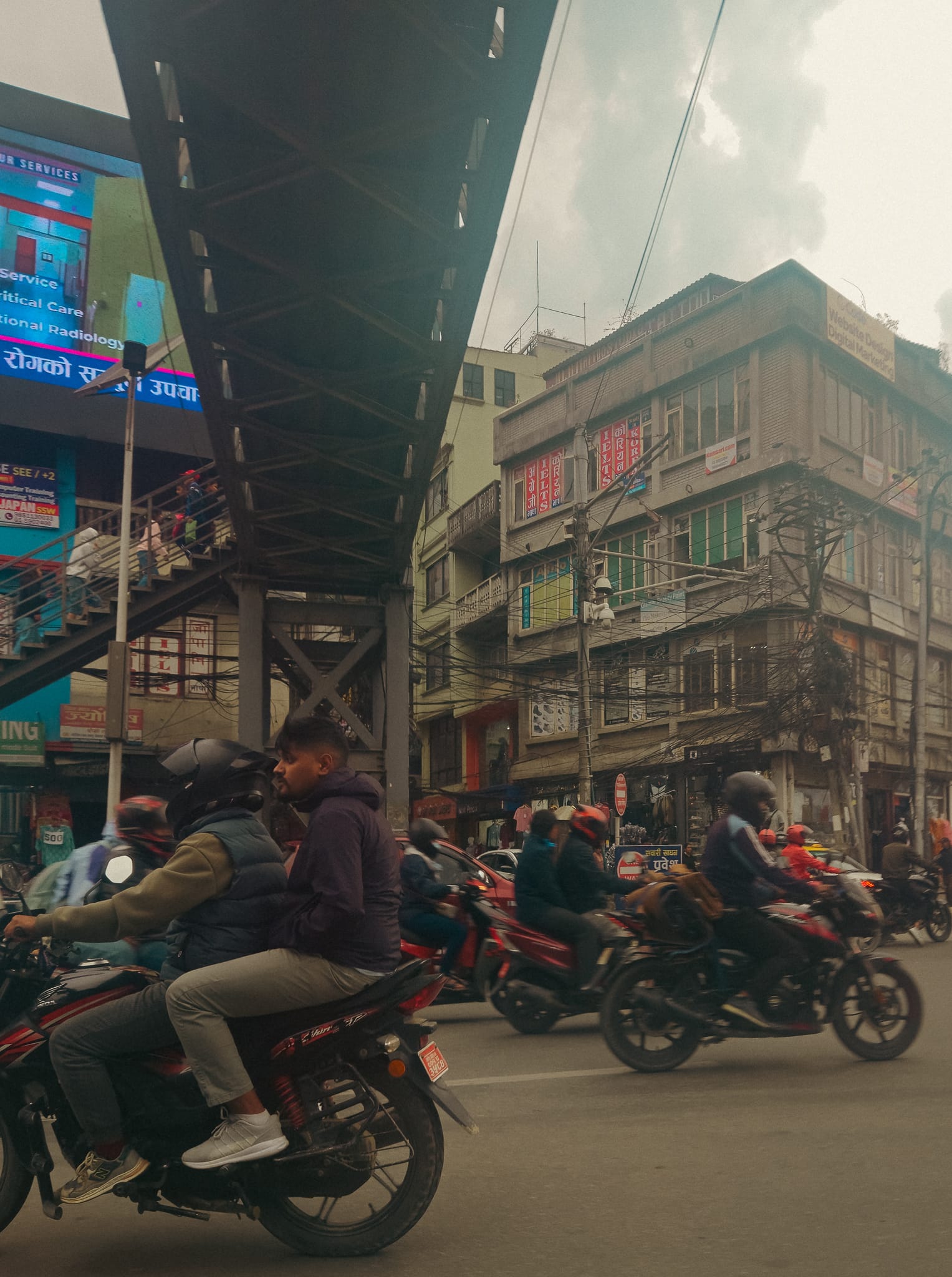
The first threshold for me was right outside the Delhi Airport. Sound landed before anything else for me. The never-ending honking at cars, cows, people, and other randomness... My body was on high alert: as human beings, we are conditioned to listen to sound rather than silence to make sure that we are not eaten by danger, especially in unfamiliar environments. A taxi driver likened the traffic chaos to a video game: “Honk and put your nose into every inch other players leave unoccupied on the road.” He seemed to be a winner...
After this disorienting start, with a few exceptions--hiking around Dhramsala and briefly meeting the Dalai Lama at his quarters--the "noise" was constant throughout my time in India. Relentless, unavoidable, and alive. There have been moments when I tried to escape it, but, there is no such thing as closing your ears...
I started to surrender in Rishikesh... I attended some hours-long sound-meditation workshop centered on our voice and singing. Given my quite the receptive aura after the session, I asked the organizer of the whole trip, Vani, where I could go for some silence. She smiled and said, "Nowhere. Your best bet is to try to enjoy the liveliness here."
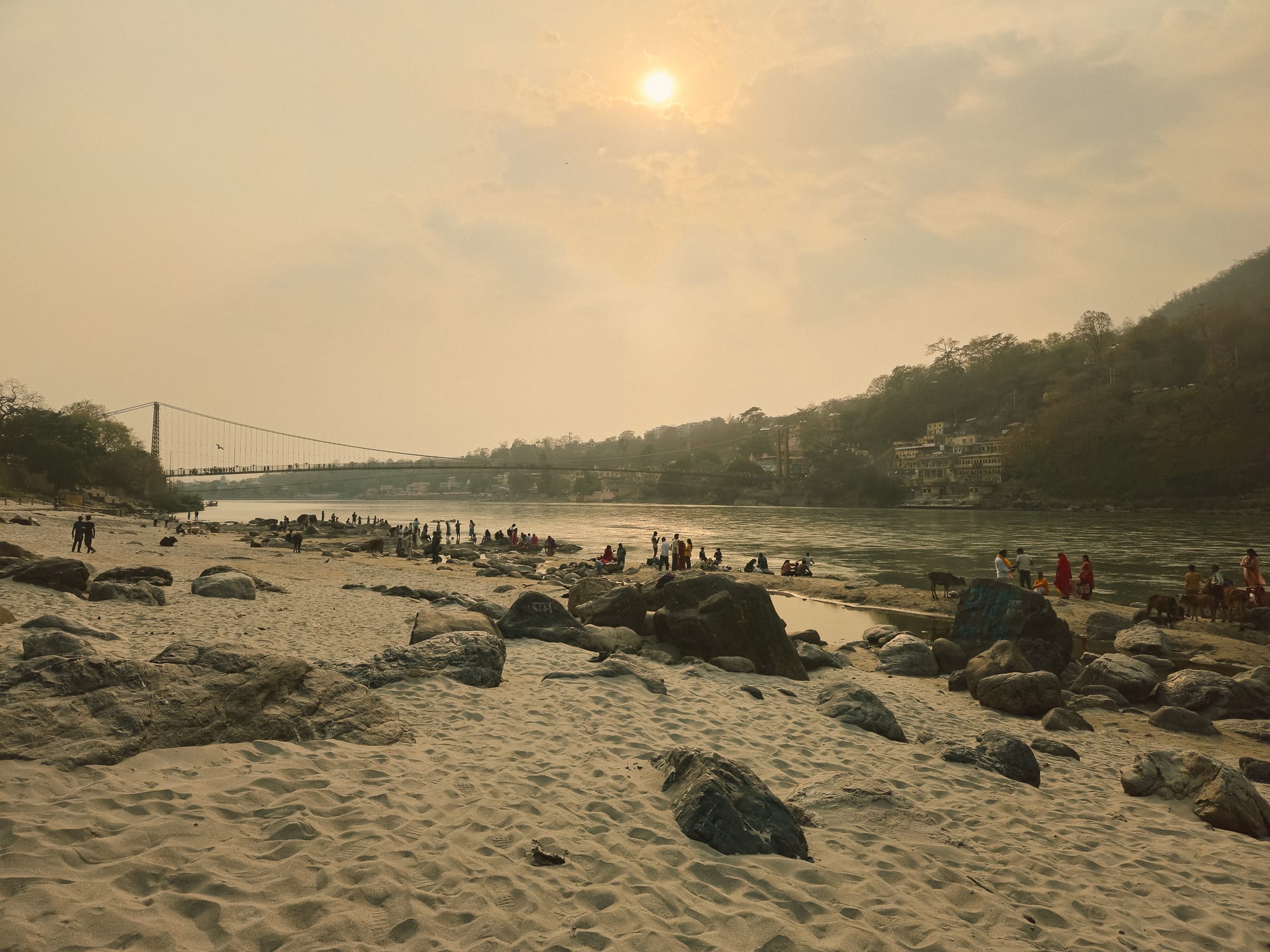
Some more secluded eco-lodges at the top of the hill were a ways away, so I gave in, and sat by the Ganges River. Frequencies layered in unexpected ways. Kids splashing in the same river where ashes from a funeral rite 200 meters away drifted downstream, bells and chanting from ashrams and monasteries, scooters honking and weaving through people, cows, and Hannumans... It was, actually, the perfect place to practice sound-centered meditation, so many objects to focus and un-focus on at once...
After a few other small cities in the North, I had stopped resisting the density of the soundscapes. Later, from India, we arrived in Kathmandu where we met a Kempo at a Buddhist monastery. The monastery was relatively quiet. The Kempo spoke about one of their morning meditation routines to eliminate the three poisons: attachment-anger-ignorance.
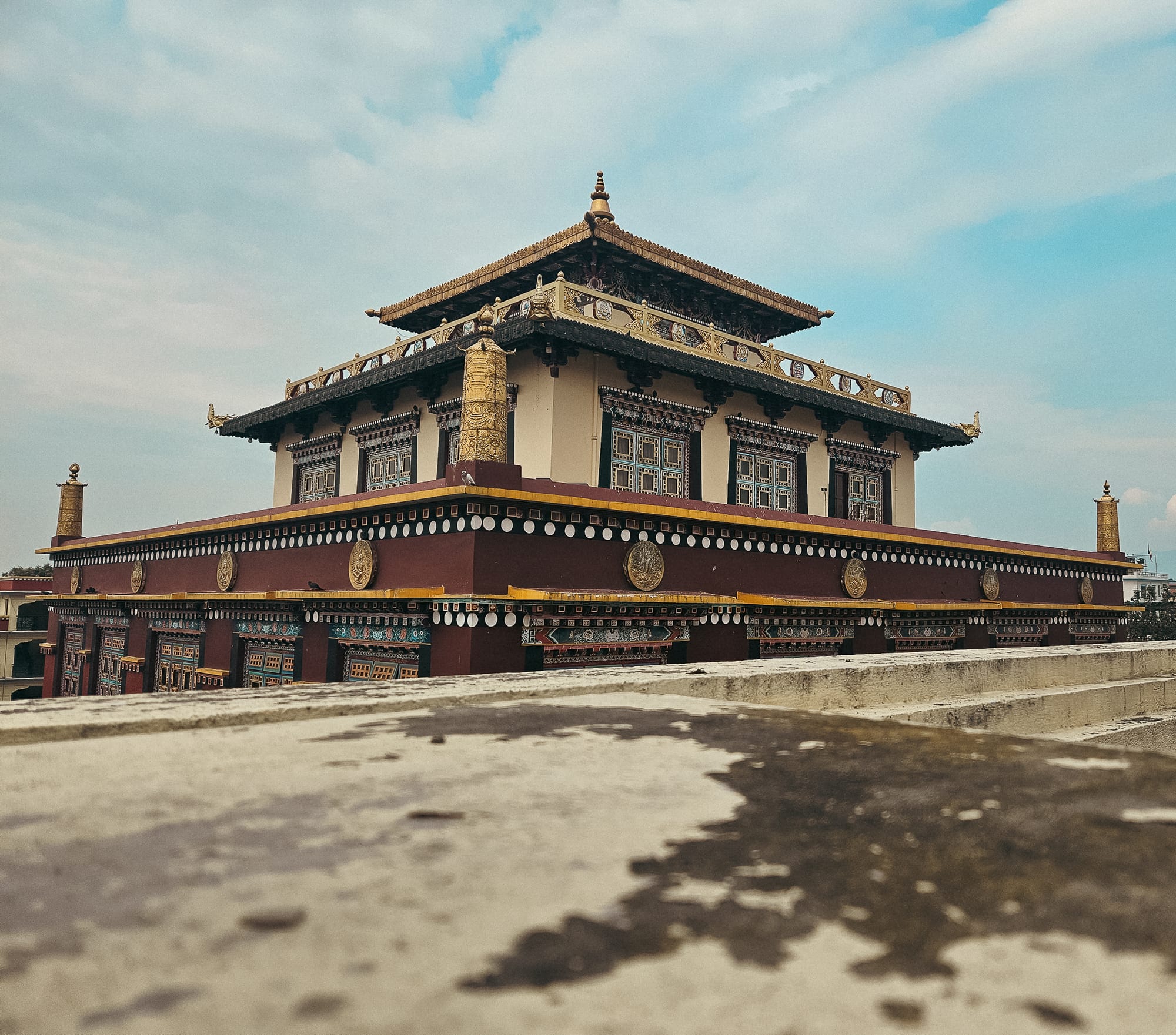
Before sitting for meditation, he explained, you must first find a silent space. With all due respect, I asked, how could this be possible in urban environments? He said, "if you can't find silence, you probably should not sit to meditate. It would be counterproductive. Silence is a prerequisite. Or perhaps, you could put on some headphones?.."
I admired the Kempo's clarity on this prerequisite. At the same time, I couldn't help but think how different his world is from the one I live in. He does not live in a metropolis where silence is not a choice for instance.
His words flashed me back to a memory from a decade ago. I am volunteering in a Mayan village in Tzununa, Lake Atitlán in Guatemala. I find myself at a zen medicine garden. Gathered around a circle, the gardener, Markus, is asking us to share something that bothers us. I tell the circle about how high-pitched frequencies irritate me--the screeching sound of a subway train, a baby crying, construction noise--when others around me seem perfectly fine with them. Markus responds, "Perhaps, it is about judgment." At the time, I thought, what does that have anything to do with my hyperacusis?..

I was to find out a decade later in Istanbul where I've spent parts of the past few years after getting stuck during the COVID-19 pandemic. Istanbul has a never-ending urban transformation soundtrack. Think construction drills starting 8am sharp and carrying on until the evening. Drills have chased me for years, until a day during a sound-meditation training...

I was practicing "tuning into my gong" when I noticed the drill noise from outside the yoga studio. The gong began to shiver and resonate with the "noise" and so did my body to a certain extent. Something shifted in me at that moment, and my contracted muscles relaxed, as the "noise" dismantled into "just another" frequency... The words from Guatemala landed, whether intended in their original meaning or not: judgment and thought comes first, before one hears a frequency as annoying or pleasant or neutral.
Sound itself is neutral...
When do frequencies become signal or noise or sound really? After this incident, I began noticing this everywhere I go.
I live in Seattle most of the year. Every summer, during Seafair, planes roar over Lake Union. Some paddle out to watch; others take their pets and escape the city. What is it that makes the same vibrations celebratory for some and intolerable for others?
Sometimes an urban environment sounds dynamic and inspiring, full of rhythm and texture. Other times, we want to close the door and leave all the noise behind. We are wired the same, physiologically, but what one culture or person perceives as "loud" might not be so for another, as long as the sound is not at universal torture-levels.
sound in our brain and judgment
Even at the level of the brain, perception shapes reality, including how we distinguish rhythm from tone. The threshold is around 20Hz, that is, 20 beats per second. Below that, we perceive distinct beats. Above that threshold, the cerebellum passes the work onto the auditory cortex, and the pattern is perceived as a continuous tone. Yet, it is still a number of "beats" per second, physically.
On the same streak, it is by perception that we label something "as" beautiful or unbearable, urgent or irrelevant, signal or noise. So, if we learn to listen differently, can signal become noise, or noise become signal?
The Kempo had offered no recipe for urban silence. And most of us would not prefer to live in a monastery anyway. In that way, the point is not to find silence but not be "attached", that is, consumed and depleted by what we habitually consider signal or noise around us. In other words, not by trying to control what we hear, but by transforming how we relate to silence, signal, or noise.
That shift requires a change in consciousness that might ripple into all our relations. How we listen is how we relate, and deep down, it's how we relate to others and our selves, that is, our conditionings. In this context, silence is not an absence, it is a relational state.
One thing the Kempo did transfer to me though is that anger or irritation can, to a certain extent, be replaced by compassion to ease suffering. I found judgment lies at the heart of this: noticing it, letting it dissolve. So, I guess, putting this in terms of silence, signal, and noise, it corresponds to this: May all those who honk endlessly and don't wear helmets have a safe ride home, which, it seems, they are quite content in their environment as it is and do not need anyone's prayer anyway.
Where is your silent place?..
If this exploration on finding urban silence within resonated with you, subscribe to get notified on new drops and shape future explorations on the atelier wall. You will also be the first to know about limited-time micro-residency and workshops on integrating creative mindful listening and sound-centered meditation practices into your life as living tools for attention, presence, and connection.
Or, if you appreciated this philosophical exploration, consider tipping to support the journey.