On sound, silence, and listening as an act of love.

When is the last time you heard absolute silence?..
Don't scroll down, like you've been conditioned to for the past two decades. You could keep reading and skip to the next line, sure, but, what if you did not?..
And you lingered instead... and stopped.
To try and recall, the last time you heard absolute silence?..
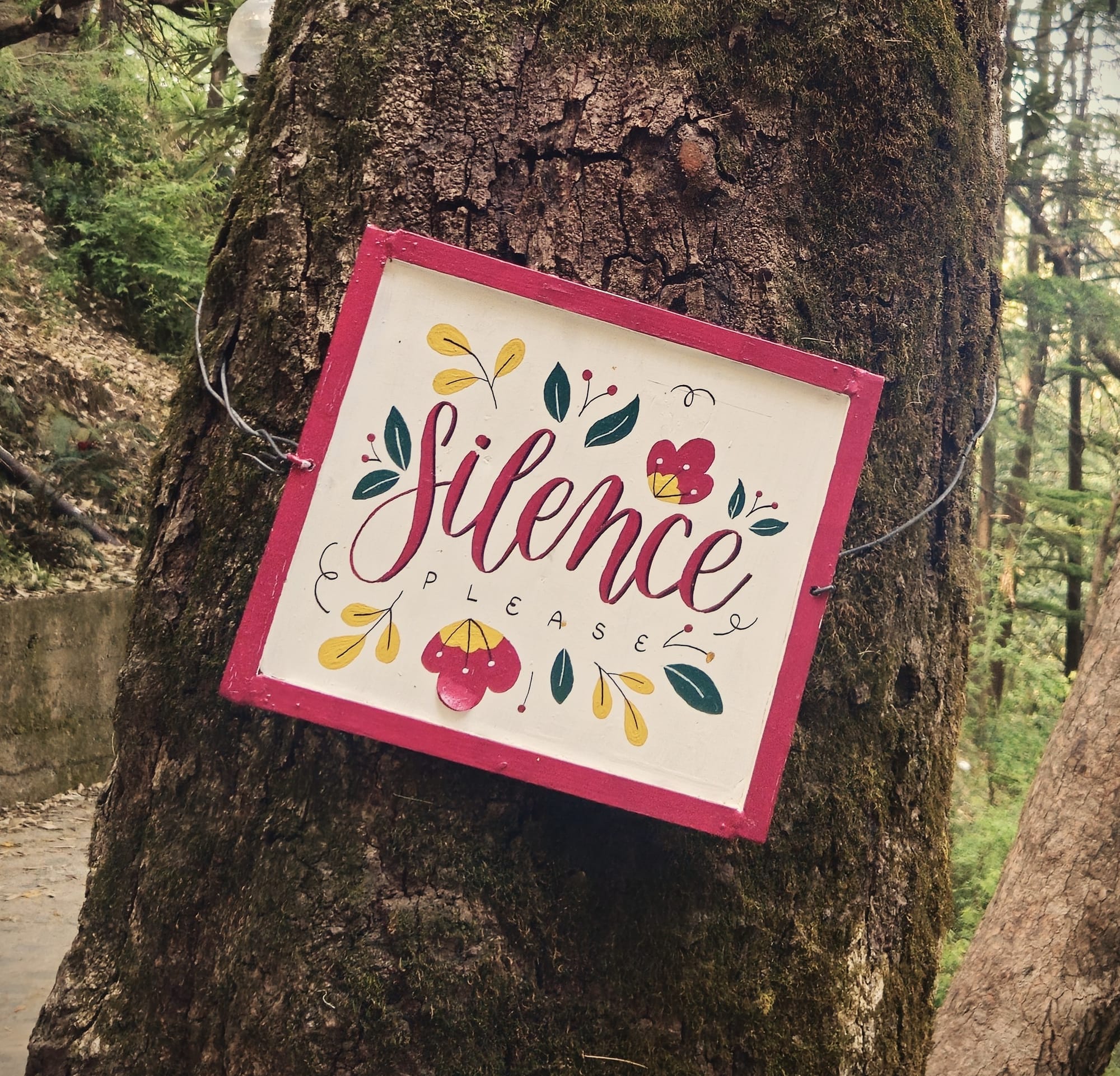
If you are after absolute silence, dream on yogi... Sound is never truly absent. Frequencies and vibrations occasionally dip beneath our perception radar depending on our biological and cultural peculiarities, that is, what we are conditioned to hear.
Even tucked inside an anechoic chamber engineered to swallow your loudest scream (echo and all), you will still hear your heartbeat, the casual flow of your bodily fluids, and perhaps even the hitherto unnoticed hitchhiker that's been riding with you all along: tinnitus (yes, we all have it if you listen hard enough). When is the last time you experienced total silence? Think about it... Does it exist?
Suppose that, inside that anechoic chamber, even the voices in your head stopped talking, and you entered a peaceful meditative state. Let us also assume that, in this altered state of consciousness, you somehow also managed to dissolve in so-called pure awareness... Still, sound is not truly absent. You are just momentarily not tending to its flux in your particular state of cognition... In other words, the world is real, whether you tend and lend an ear or not.
Like death, silence is elusive, more concept to ordinary consciousness than tangible experience. You cannot grasp your own dying moment, just as absolute silence remains beyond the grip of ordinary consciousness. Yet, we chase unattainable mysteries like death and silence. In the chase, art(ificial) and children become our exchanges with death, and sound, our exchange with silence. But don't mistake silence and sound for mere opposites; they contain each other. Like death gives life depth and meaning?..

Silence is the fleeting contraction of the pulse, between two heartbeats, or between an inhale and an exhale, where the self dissolves into the flow of consciousness at rest–a relational, borderless, Neptunian state (if you catch the mythic shorthand). It is the moment between the poet's gaze and the pen's first strike on the page. It is our commas. Or, if we are lucky, a fertile ellipsis... A space of tending, attention, an ear stretch...
Silence is pregnant with the possibility of sound and the promise of resonance—it is the latency, the origin, the threshold, the emergence, and the return of sound. The unstruck vibration that grounds all expression, not an absence.
Silence is to sound as stillness is to motion, as space to objects, zero to numbers... In each case, silence holds relational, generative, creative potential. We piece the world together from what shows up on our perception radar; latent vibrations emerge from silence only to eventually dissolve back into it. We are born; we eat, work, love and long, fight and fear, make things, change or resist, and, inevitably we die (at least for now, still, in the 21st century).
Yet, the whole endeavor is not just about us, as human beings, trying to be seen and heard. In some cosmologies, sound is not just life's expression, it is imagined as the cosmic architect and animation artist. For example, in their creation story, Native American pueblo tribes of the Southwest tell of Sun God Tawa and Spider Woman singing "a song of life" onto Earth, to endless waters and space. With this song, they animate the first humans from clay form and saliva. Australia's Aboriginal ancestor beings sing the landscape and song-map reality into being from a repertoire called "dream time." Egyptian architect-god Ptah speaks the world into existence. Or, in the beginning was the Logos (or word), and the Logos was with God, and the Logos was God. The universe started with a big "bang," and as quantum superstring theory riffs, reality arises from miniscule vibrating strings. Seismic or subtle, some contemporary thought understands resonance as being-with and the unfolding of presence, while others see sound as a material force that shapes matter and relations, acting even where no ear is present.
In all these existential myths, whether a subject exists or not, sound is not just a byproduct of reality, it is the very blueprint of existence. Not merely symbolic, sound is world-making... If every world begins in sound, what reality will you tune into tomorrow morning?...
Out of all these musical compositions, my ears lately perked up to a cosmology humming along to the primordial "OM"–the sound I have casually intoned during yoga sessions for the past 15 years or so. Some of these sessions started and ended with this "OM," or three... I tuned along, peacefully and intuitively, resonance-wise, to these starting and ending OMs. It was a good Western physiological stretch in between, and a few seconds of not-thinking-much felt good during these sessions. Turns out, according to this Hindu cosmology, I had been tuning into the cosmos...
Can sound lead us to a state of silence? And what's Nāda Yoga and A-U-M got to do with it?
Through some jazzy coincidences, I found myself diving into a year-long teacher's training in a form of Nāda Yoga - Yoga of Sound. My sole secular intention was to incorporate sound-centered meditation techniques and instruments into my daily mindfulness practice that has kept me grounded in what feels like an increasingly faster-spinning world in the past couple of years.
After this mostly experiential study and my tangential personal inquiries into Eastern philosophies, my take: Yoga of Sound is a set of techniques that use sound as a meditation object to cease thought and fluctuations of the mind, on a pursuit of liberation by realizing the true nature of the self. This "self"-realization is a creative unconditional awareness that is only aware of itself, simultaneously at one (not in union) and detached from the senses and the mind that interact with ego, matter, thought... Not a renunciation but more a having-control-over desires and fears to arrive at a neutral mind.
Or put simply, experiencing your self-as-sound (or silence). It is an altered state of consciousness that is at once sound, resonance, relational unfolding, creative force (Shakti in the tantric tradition) and silence, origin, latency, return (Shiva). It is about entrainment, not entertainment. A different experience than when you play a musical instrument in a band that sounds tight or shattering windows as you sing in the shower. In Nāda Yoga, sound is both the path to and the expression of this consciousness.
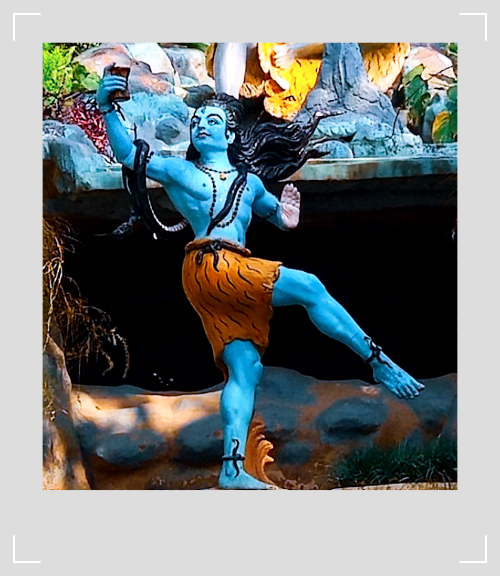
According to this tantric-flavored lineage of yoga, the cosmos is born from the primordial sound, A-U-M, still reverberating through every particle of existence. A-U-M, as the whole of existence recited, is and represents a journey of emergence from silence to sound and dissolution back into silence. Sanskrit blows my mind as a formally semiotics-trained mind in 3 letters:
In the sonic spectrum of A-U-M, the first part, AAA, like the baby's first cry, embodies the ordinary waking-state consciousness that expresses, senses, and engages with the external world; the universe as it expresses itself, the whole structure, objectified, knowledge, motion, body...
UUU embodies the dream-state consciousness, mind, ego, intellect, vital energies... A state of engaging inwards with the actions of the mind and so-called subtler realities. Here, the boundaries between the subject and object blur.
MMM, buzzing around the head, is and represents the seed, the realm of deep-sleep consciousness. Here, there is no observer or observed but the formless void before manifestation. No mental activity. No desire. No measurement. It is the end of sound (nadanta).
There is a fourth unstruck sound in the end: silence. Pure consciousness itself, where all dissolves into potentiality, not separate from but underlying the other three states of consciousness. It is like the water that underlies the ocean and the wave. In this altered state of consciousness, the distinctions between the meditator, act of meditation, and object of meditation have disappeared.
As such, A-U-M represents four states of consciousness, the last three definitely differing from my ordinary states. So, chanting "AUM" isn't merely symbolic; the Nāda yogi believes that it creates in one's psychosomatic system a sympathetic vibration to briefly synchronize with the whole of existence...
Disclaimer: Although I find them fascinating, I'd choose humming or other voice exercises over chanting Sanskrit mantras anytime, including OM. I found that they do not resonate with me, as they carry a whole package of cultural associations that I do not fully understand. Unless someone were to magically impart that experiential knowledge to me, I'd rather not blindly repeat something I do not know.
Back to another Sanskrit word, Nāda. It means the primal vibration, the flow of consciousness, or sound. In fact, it is the whole sonic endeavor: sounding, the sounder, the sounded, and silence that births it all. According to some, "Nā" is breath, "da" is fire; and sound is born from their union. According to others, "Nā" is the sea of consciousness, the seed, potential (Shiva); and "da" is the urge, the force applied (Shakti); and da into nā produces motion...

The Yoga of Sound's wager for liberation, if you will, is the belief that the power of sound can unlock the doors of perception to an altered state of consciousness... According to this art of consciousness, all sounds, from construction noise and honking to birds and bees, when deeply listened to, can become a bridge into stillness and silence.
The practitioner's meditation object is sound and the path to liberation traverses from engaging with external sounds to eventually sounds you can hear with your "third ear." There are four stages on the path, sort of mirroring the unfolding of AUM. Like most other tantric paths, the first starts in the senses, in action. Sound-meditation practitioners listen to all sounds from the cacophony of daily life to subtle bodily murmurs. They also produce sounds in the form of mantras, overtoning, or with meditation instruments such as the gong, singing bowls, conch shells, bells, etc. to induce a meditative state.
For years, I could not meditate for more than 3 seconds with other methods such as breathwork or other types of physical yoga. My mind would jump on adventurous trains of one thought to another. I just could not "let the thoughts pass like white clouds on a blue sky..." while lying in corpse pose. Sound-meditation enabled me to easily enter a meditative state, because it is impossible to listen to your mind chatter when you actively listen or sync with sounds that are not music (which usually involves something someone else wants to express like emotions, thoughts, beliefs, etc.).
Except for Sanskrit mantras that do not resonate with me, I have found many creative ways to incorporate sound-meditation into my routine, actively listening to and producing sounds in the external environment that put me on the way to that place of stillness and silence. At this first stage of the journey, switching from passive hearing to such active listening, or tuning in, has profoundly altered my own perceptions of sound and silence, transforming even what I once considered unbearably irritating sounds into insight.
The major shift in perspective or state of mind occurred for me when we were practicing on our gongs in the studio during our training. My gong started vibrating and resonating with the frequency of the loud construction noise coming from outside the studio–the moment when I experienced: the judgment and thought comes first, before one hears a frequency as annoying or pleasant. Now, my reaction, when I have the capacity and bandwidth of course, not always, is more along the lines of "May all those who honk have a safe ride home..."

In this context, silence, is not a lack of phenomena but freedom from fixation on and meaning of any phenomena. The prerequisite to that freedom is listening... Silence opens listening, listening opens silence. Listening and silence are an ontological, experiential, relational opening to authentic creation and the so-called Other...
Listening as an altruistic act of self-love
Is aspiring to transform into an all-pervading soundwave of silence merely narcissistic escapism?.. "What a self-indulgent thing to spend time on, sitting around, given all that's going on in the world that requires action... Infantile resignation to some oceanic feeling." My former skeptical self thought so–until a couple of years ago when she met Pepe, in Nayarit, Mexico, who reminded her of otherwise, as he shared his indigenous traditions during their sacred ceremonies. At his family home's garden, around a fire under a visible starry sky, next to a loud highway, he explained how, among his people, if one suffers, the whole tribe is afflicted, and the same kind of emphatic relating extends to the more-than-human.
According to this relational perspective, the border between my Western so-called secular self and the Other is quite porous. So, taking the time to tune into silence and taking care of oneself isn't indulgent but an essential foundation. It might actually be one of the best things that you can do to be present and contributing. Going back to the Hindu analogy, Shiva does not objectify himself as Shakti out of a desire to be complete, that creation is rather an overflow from fullness.
Silence leaves space for truths to surface, demanding courage and vulnerability—ingredients crucial to authentic love. So, attempting to listen to silence is a fundamental act of love. But, what is your intention in doing so?...
On a journey from sound to silence, what is there to be heard, while fading in and out of our feelings, thoughts, sensations, sounds? Maybe your psyche associates silence with abuse, such as silent treatment you have been exposed to, or maybe silence puts you in fight or flight mode by reminding you of oppression and censorship? Silence can be uncomfortable but a rich and profound auditory state.
And can one hear a creative potential in silence? And where exactly is this potential or "true nature" as Zen Buddhism would put it? I read a book by Thich Nhat Hahn on a loud flight a couple of years ago, called Silence: The Power of Quiet in a World Full of Noise, discussing this silence in more practical terms. He portrays silence as a heart-centered state facilitating genuine connection: "Silence allows for deep listening and mindful response, the keys to full and honest communication. Silence comes from your heart, not from the absence of talk."

Listening to silence as an act of love is not about hearing the absence of sound, absolute silence—it is about creating a space for presence, for attention, and therefore for connection. A setting aside of distractions, judgments, and noise, free of narrative, identity, and constructs, where we are no longer shaped by the stories we carry or the roles we play. I would assume this ultimately aims to serve as a vehicle for authentic expression and relational responsibility as part of a secular ethics.
You can get to know your self (which is as much as I can associate with spiritual awakening) not just as an intellectual puzzle but also as experiential truth. These practices, like the field of psychoanalysis has, have encouraged me to celebrate self-awareness and more deeply examine my conditionings; confront fears and shadows; and embrace the metamorphosis. Listening opens up to the other in or outside of ourselves.
Sound has been the medium, message, and transformative agent for me recently, dissolving borders within and without. It is quite a nice day today with all its cacophony and contradictions...
Whether with silence or sound, we resonate, therefore, we are.
If this exploration on sound, silence, and listening as an act of love resonated with you, subscribe to get notified on new drops and shape future explorations on the atelier wall. You will also be the first to know about limited-time micro-residencies and workshops on integrating creative mindful listening and sound-centered meditation practices into your life as living tools for attention, presence, and connection.
Or, if you appreciated this philosophical exploration, consider tipping to support the journey.